


Five Finger Breathing: Why It Works (And Why It Doesn’t Always)

Updated: May 1
If you’ve ever been told to “just take a deep breath” when you’re anxious…you already know how frustrating that can feel.
Because sometimes it works.
And sometimes… it makes things worse.
That’s where five finger breathing comes in.
It’s one of the simplest ways to calm your nervous system—but only if your body actually accepts it.
Let’s break down what it is, why it works, and when you might need something more targeted.
Disclaimer: The content on this site and my posts are for educational and informational purposes only and not meant as medical advice. It is not intended as medical advice or to replace a relationship with a qualified healthcare professional. There is absolutely no assurance that any statement contained or cited in an article touching on medical matters is true, correct, precise, or up-to-date. Please consult a clinician that is familiar with your care, if you have specific questions for your own care.
What is Five Finger Breathing?
Five finger breathing is a simple technique where you:
Trace up one finger as you inhale
Trace down as you exhale
Move finger to finger until all five are done
That’s it.
But what makes it powerful isn’t the breathing alone—it’s the combination of breath + touch + visual input.
You’re giving your brain multiple signals at once that say:👉 “We’re safe right now.”
In a place where you don't want to be seen tracing your hand? Try visualizing the Five-Finger Breathing method and pair it with your breathing
Why It Can Calm Your Nervous System Fast
Your nervous system is constantly scanning for threat.
And when it thinks you’re under attack—socially, mentally, physically, or emotionally—it shifts into protection mode.
The vagus nerve plays a major role here. It’s part of your parasympathetic nervous system, which helps regulate heart rate, digestion, and stress responses.
Five finger breathing works because it:
Slows your breathing (signals safety)
Engages touch (body awareness)
Uses visual tracking (brain engagement)
You’re not just “relaxing”—you’re changing the signals between your brain and body.
Please Note: Some links on my site are affiliate links, which means that I collect a small portion of your sale, at no extra cost to you. This helps with the cost of running a website, providing services, etc.
Why Breathing Exercises Don't Work for Everyone
The thing is: Your nervous system decides what it likes.
Not trends. Not research. Not even my doctorate.
If your system doesn’t feel safe with slow breathing, you might notice:
Feeling more anxious when you focus on breath
Tightness in your chest or ribs
A sense of “I can’t get a full breath”
Getting lightheaded or dizzy
That’s because your body isn’t ready for that input yet.
And forcing it? Usually backfires.
(If that sounds familiar, read: “Why Breathing Exercises Don’t Work” inside👉 [Simple Daily Routines to Calm Your Nervous System Naturally])
Common Mistakes with Five Finger Breathing
Even though it’s simple, people still miss key pieces:
1. Forcing deep breaths
Bigger isn’t better. Your system wants comfortable, not forced.
2. Only focusing on breath
The magic is in combining breath + touch + vision
3. Expecting it to work every time
Your nervous system is dynamic. What works one day might not the next.
4. Skipping the root cause
This is a tool—not a full solution.
Real Client Example
I had a client dealing with constant anxiety and dizziness from school stress.
She had tried breathing exercises before—and felt worse.
Instead of forcing breathwork, we adjusted the input:
Added gentle visual tracking
Reduced intensity of breathing
Matched what her system could tolerate
Within one session, her dizziness significantly improved.
That’s the difference between: guessing and testing your nervous system in real time
When Five Finger Breathing Isn't Enough
Five finger breathing is a great entry point.
But if you’re dealing with things like:
Chronic anxiety
Sleep issues
Dizziness or POTS symptoms
Gut issues or fatigue
Persistent tension or pain
…it usually means there are deeper nervous system patterns at play.
(You’ll want to read:
What Actually Creates Lasting Change
Quick exercises help.
But lasting results come from:
Finding your specific triggers
Testing what your system responds to
Using the right input at the right time
This is exactly what I’ve built into my programs.
Where to Start (Based on You)
A 7-minute nervous system reset designed to calm your system quickly using brain-body techniques.
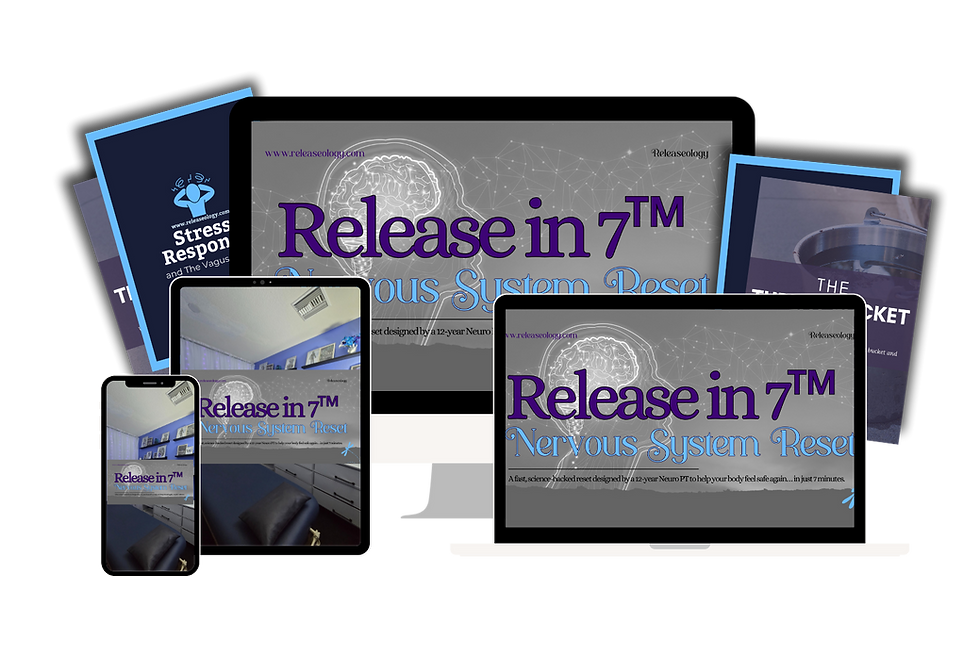
Perfect if:
You want something simple
You’re overwhelmed
You need something that works right now
If you want deeper results:
Includes:
20+ vagus nerve stimulation exercises
Breathing (that actually works for different bodies)
Face, neck, and abdominal releases (where the vagus nerve can get “stuck”)
Grounding + sensory work

Perfect if:
You’ve “tried everything”
Your symptoms don’t make sense
You want options your body can actually respond to
If you Want Fully Personalized Results:
Where I
Test instead of guess
Find your hidden contributors
Build a plan based on your nervous system
Choose the Nervous System Coaching Assessment for virtual and the Vagus Nerve Massage Therapy for in-person in Tempe, AZ!
Want to Go Deeper?
These will connect the dots even more:
Final Thought
Five finger breathing isn’t “magic.”
But it is a powerful signal to your brain and body—when it’s used at the right time, in the right way, for your system.
And if it doesn’t work for you?
That’s not failure. That’s information.
👉 Your nervous system is telling you it needs something different.
Medical Disclaimer
The content on this site and my posts are for educational and informational purposes only and not meant as medical advice. It is not intended as medical advice or to replace a relationship with a qualified healthcare professional. There is absolutely no assurance that any statement contained or cited in an article touching on medical matters is true, correct, precise, or up-to-date. Please consult a clinician that is familiar with your care, if you have specific questions for your own care.



Comments