


7-Minute Vagus Nerve Reset: Can It Really Calm Anxiety Fast?

If you’ve ever Googled “how to calm anxiety in minutes”, you’ve probably been told to just… breathe.
But what if you’ve already tried that—and it didn’t work?
Or worse… it made you feel more anxious?
Here’s the truth most people aren’t telling you:
Calming anxiety isn’t about doing more. It’s about doing what your nervous system actually responds to.
And for many people, a targeted vagus nerve reset can create a shift in minutes.
Disclaimer: The content on this site and my posts are for educational and informational purposes only and not meant as medical advice. It is not intended as medical advice or to replace a relationship with a qualified healthcare professional. There is absolutely no assurance that any statement contained or cited in an article touching on medical matters is true, correct, precise, or up-to-date. Please consult a clinician that is familiar with your care, if you have specific questions for your own care.
What is a 7-Minute Vagus Nerve Reset?
A 7-minute vagus nerve reset is a short, targeted sequence designed to:
Improve communication between your brain and body
Reduce your body’s “threat” response
Help your system shift out of stress mode
Unlike generic routines online, this isn’t just deep breathing.
It works on multiple systems at once:
Your vagus nerve
Your visual system
Your body awareness (proprioception)
Your rib and breathing mechanics
Why does that matter?
Because your nervous system doesn’t calm down from one input alone—it responds to patterns of safety.
Looking for an even simpler place to start?
Since creating this 7-Minute Vagus Nerve Reset, I've developed the 5-Minute Stress Reset, built around the #1 exercise I recommend to help calm a stressed brain and body.
👉 If you’re newer to this, I break down exactly how this works in simple terms here: Understanding the Vagus Nerve: An Introductory Guide
Can It Really Calm Anxiety Fast?
Short answer: Yes—for a lot of people.
But not because it’s “magic.”
It works because you’re changing the signals your brain is receiving in real time.
When your brain senses:
Less tension
Better movement
More predictable input
…it starts to shift out of protection mode.
That can feel like:
A sudden drop in anxiety
A deeper, easier breath
Your body “letting go”
A sense of calm you haven’t felt in a while
I’ve had clients:
Go from feeling depressed to almost euphoric after one session
Walk in dizzy and overwhelmed from school stress… and feel noticeably better within minutes
And if you’re wondering whether your symptoms could even be related to your nervous system…
👉 Start here: Vagus Nerve Disorders and Symptoms
Why A Vagus Nerve Reset Doesn’t Work for Everyone
If you’ve tried other strategies and thought, “Why is this not helping?”—you’re not doing it wrong.
You’re just missing context.
Here are the most common mistakes I see:
Forcing deep breathing (which can actually increase stress)
Assuming sitting still = your body feels safe
Following trending exercises instead of your body’s response
Your nervous system doesn’t care what’s popular online.
It cares what feels safe to you.
What Actually Changes in 7 Minutes?
In just a few minutes, you can start to shift:
Brain signaling (less “threat,” more “safety”)
Muscle tension (jaw, ribs, gut start to release)
Breathing patterns (more natural, less forced)
Body awareness (you feel more “in” your body)
At a deeper level, you’re telling your system:
“You’re not being attacked—socially, mentally, physically, or emotionally.”
And when your brain believes that?
It stops bracing.
When a 7-Minute Reset Doesn’t Work
This is important.
If a quick reset doesn’t work for you, it doesn’t mean:
Your anxiety is “too severe”
Or that nervous system work isn’t for you
It usually means one of these is happening:
Your “threat bucket” is already overloaded
Your rib and breathing mechanics need support first
Your nervous system doesn’t like that specific input
This is where going deeper—and more individualized—makes all the difference.
Why This Approach Works (When Others Don’t)
I’ve spent 12+ years in neuro rehab—treating the brain directly in conditions like stroke, dizziness, and complex neurological disorders.
One thing was always true:
No two nervous systems respond the same way.
That’s why my approach is based on:
Testing instead of guessing
Real-time feedback from your body
Brain-body signal work—not just symptoms
You’re not just doing exercises.
You’re finding the ones your nervous system actually accepts.
So… Should You Try a 7-Minute Reset?
If you:
Feel anxious “for no reason”
Have tried breathing, meditation, or relaxation without results
Notice symptoms like dizziness, tension, or overwhelm
Then yes—this is a great place to start.
Because sometimes…
Your body isn’t stuck. It just hasn’t been given the right input yet.
Ready to Try It for Yourself?
If you want a guided version of this approach:
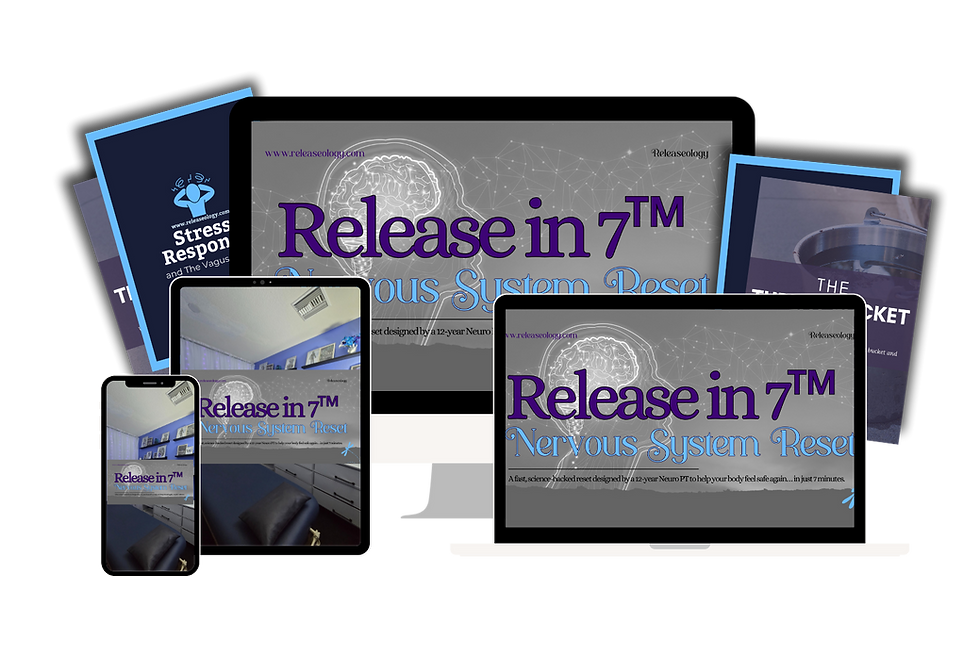
You can start Release in 7 today
Want More Options?
You’ll get access to my full Nervous System Reset Library with 20+ ways to stimulate your vagus nerve based on what your body responds to.
Want it tailored specifically to you?
At Releaseology, I specialize in identifying and addressing the root causes of pain and dysfunction, including vagus nerve disorders. My holistic approach combines manual therapies, nervous system regulation techniques, and advanced modalities to restore balance and vitality. Whether you’re struggling with chronic pain, digestive issues, or emotional imbalances, my one-on-one, hands-on care can help you achieve lasting relief.
Don’t let vagus nerve dysfunction hold you back. Book your session today and experience the Releaseology difference. Let’s get to the root of your symptoms and help you feel your best!
Book the Vagus Nerve Massage if you can see me in Tempe, AZ. If you don't live locally, I also offer virtual nervous system coaching.
Final Thought
The fastest way to calm anxiety isn’t doing more.
It’s doing what your nervous system actually understands.
And sometimes…
That shift can happen in minutes.
Medical Disclaimer
The content on this site and my posts are for educational and informational purposes only and not meant as medical advice. It is not intended as medical advice or to replace a relationship with a qualified healthcare professional. There is absolutely no assurance that any statement contained or cited in an article touching on medical matters is true, correct, precise, or up-to-date. Please consult a clinician that is familiar with your care, if you have specific questions for your own care.



Comments